About
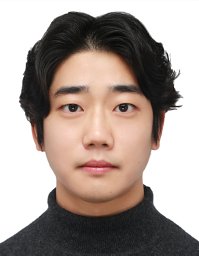
I am a researcher at the Korea AI Safety Institute (AISI) within ETRI, working on explainable and robust deepfake detection. I received my Ph.D. in Electrical Engineering from KAIST in 2026, where I was advised by Prof. Junmo Kim (SIIT Lab), my M.S. in Artificial Intelligence from SKKU in 2021, where I was advised by Prof. Jae-Pil Heo (VC Lab), and my B.S. in Electrical Engineering from State University of New York (Buffalo) in 2019. During graduate studies, my research focused on dataset condensation, domain adaptation/generalization, and generative models.
If you're interested in collaborating, feel free to reach out! 🤩
News
- 2026-04 🎉🎉 One paper has been accepted to ICML 2026.
- 2026-02 🎉🎉 Two papers have been accepted to CVPR 2026 (one Main Conference and one Findings).
- 2026-01 🎉🎉 One paper has been accepted to Pattern Recognition.
- 2026-01 🥳🥳 I joined AISI Korea as a Researcher.
- 2025-09 🎉🎉 One paper has been accepted to NeurIPS 2025.
- 2025-07 🎉🎉 One paper has been accepted to MICCAI Workshop 2025.
- 2024-10 🎉🎉 One paper has been accepted to WACV 2025.
- 2024-09 🎉🎉 Two paper has been accepted to NeurIPS 2024.
Publications (Total: 0, Conference: 0, Journal: 0, Preprint: 0)
Dissect and Prune: Enhancing Robustness in AI-Generated Image Detection
Beyond Semantics: Disentangling Information Scope in Sparse Autoencoders for CLIP
PRISM: Video Dataset Condensation with Progressive Refinement and Insertion for Sparse Motion
Boundary-recovering network for temporal action detection
Frequency-Aware Token Reduction for Efficient Vision Transformer
PSGM-TR: A Transformer-Based Approach for Pulmonary Segment Segmentation Using Gaussian Mixture Models
DAM: Domain-Aware Module for Multi-Domain Dataset Condensation
AH-OCDA: Amplitude-based Curriculum Learning and Hopfield Segmentation Model for Open Compound Domain Adaptation
Self-supervised Transformation Learning for Equivariant Representations
Unlocking the Capabilities of Masked Generative Models for Image Synthesis via Self-Guidance
PSGMM: Pulmonary Segment Segmentation Based on Gaussian Mixture Model

Learning Neural Deformation Representation for 4D Dynamic Shape Generation

Stereo-Matching Knowledge Distilled Monocular Depth Estimation Filtered by Multiple Disparity Consistency

Modeling Stereo-Confidence Out of the End-to-End Stereo-Matching Network via Disparity Plane Sweep

Expanding Expressiveness of Diffusion Models with Limited Data via Self-Distillation based Fine-Tuning
Few-Shot Anomaly Detection with Adversarial Loss for Robust Feature Representations

TCX: Texture and channel swappings for domain generalization

Data Poisoning Attack Aiming the Vulnerability of Continual Learning

Deep Cross-Modal Steganography using Neural Representations
Unveiling Temporal Telltales: Are Unconditional Video Generation Models Implicitly Encoding Temporal Information?

Multi-scale foreground-background separation for light field depth estimation with deep convolutional networks

Reinforcement Learning-Based Black-Box Model Inversion Attacks

Fix the Noise: Disentangling Source Feature for Controllable Translation

I See-Through You: A Framework for Removing Foreground Occlusion in Both Sparse and Dense Light Field Images

Pivot-Guided Embedding for Domain Generalization
Honors & Awards
2025
Bronze Prize, Samsung HumanTech Paper Awards
2022
Best Paper Award, CVPR Workshop on AI for Content Creation (Sponsored by Google)
Academic Service
🏅 Gold Reviewer
- International Conference on Machine Learning (ICML) - 2026